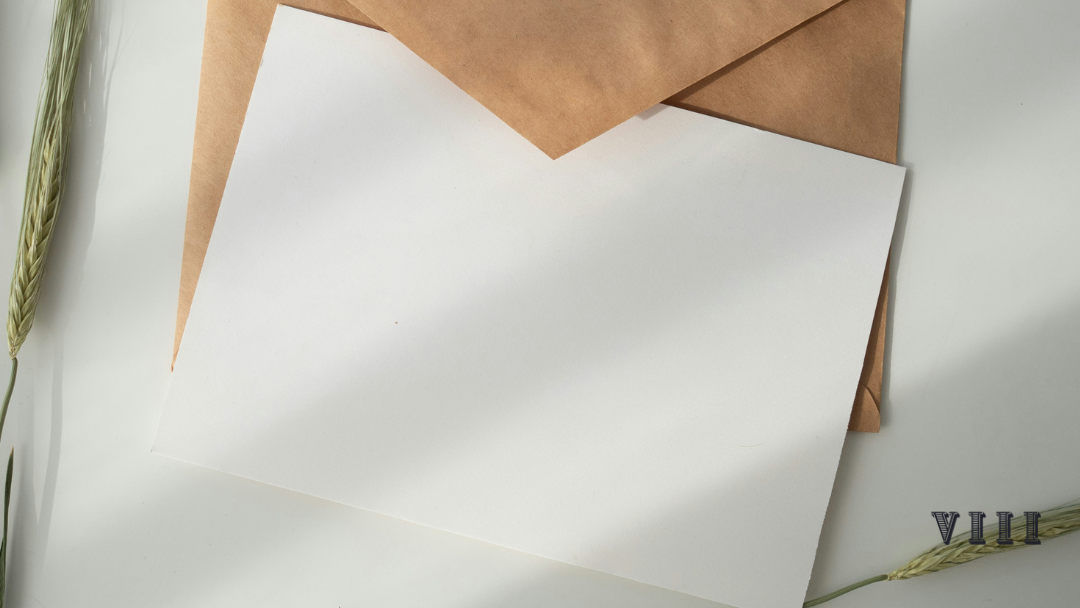
Theresa inhaled sharply when she saw it. Nestled between a restaurant flier and the water bill lay an envelope with her son’s name. She ran the tips of her fingers over his chicken scratch letters then clutched it to her breast. She hadn’t seen his handwriting since he’d died a decade ago.
Once inside she poured a cup of herbal tea and examined the envelope, holding its corners gingerly. On the back flap in crisp cursive his high school English teacher wished this letter found her son well. She pursed her lips in anger before remembering she’d never bothered contacting the school. What was the point? Fergus had already graduated and had dreaded every day inside those dreary brick walls. She should have let him start community college early. He might’ve kept going.
She held the envelope up to the window in the late afternoon light. It was impossible to see through it. He’d liked English, hadn’t he? It might have helped him write better poems for that girl he’d spent months pining for. And then she remembered. The project Fergus had resented so bitterly: a letter about where you see yourself in ten years that would be mailed when it was time. She’d thought it sounded neat—a chance to see if anything you’d wished for yourself came true—though she never dared tell him so. He might have quit the project altogether if she’d shown interest. She recalled coming home after her shift and reaching out to tousle his dark greasy hair as he sat at the kitchen counter to write it, scowling and covering his words with his hands. She’d kissed his forehead and told him to take a damn shower already, more concerned with getting those shoes off her tired feet than whatever the hell he might have been writing about. Why hadn’t she peeked?
She laid it flat against the table, slowly running her fingertips against his name and address as if it were braille, as if she could somehow divine who he’d thought he would become. It was a question she’d asked herself often. At her sister’s for Thanksgiving dinner, she’d wonder, would he be here, his hands stuffed in his pockets, standing awkwardly next to his cousins for a picture? Would he have driven home to visit, his new girlfriend nervously gripping his arm? Or would he have made excuses—the stress of a promotion at work, the price of gas, the new baby—his voice a faint wisp through the telephone wire. It’s okay, she would have reassured him. There will be another time.
She left it there for weeks, the blank face of the envelope greeting her each time she walked into the room. She pictured him everywhere. At the grocery, she wondered if he would have outgrown his allergy to mangoes or acquired a taste for asparagus. Driving home, she felt his presence in the passenger seat. She told Fergus about the patient she’d met on her double shift at work as she sat in traffic on the highway, watching the shimmer of hot asphalt. “You would have liked him,” she said. “Despite everything moving for the worst he still had such a lively sense of humor.” She reached across to pat his knee and felt the cool upholstery beneath her palm.
She kept waking up in the middle of the night. When she’d walk to the kitchen for a glass of milk, the letter seemed otherworldly, a pale blue rectangle glowing in the moonlight. Was it a sign? Was some version of him somewhere out in the universe sending her a message? She stared down at it and shivered, the tile floor too cold beneath her feet. Was she actually becoming the kind of person who believed such things?
When her sister came to visit she held the letter out to Theresa.
“You can’t lose any more sleep over this,” she said softly.
Sometimes Theresa thought she should just throw it away, but she’d taken comfort in its constant presence. She replayed the memory in her mind, trying to peek between Fergus’ shielding fingers. She could never see the letter’s contents no matter how hard she tried.
“Give it to me,” she said. Her sister’s fingers lingered against her own as she passed the envelope. Theresa trembled as she tugged the edge of the glue, pulled out the single sheet of notebook paper with one graphite smudged sentence scribbled at the top: In ten years I’ll be six feet under.
She shut her eyes, warm tears sliding into the corners of her mouth. My sweet, cynical boy, she thought. Here you are at last.
CARLY LYNN GATES is a communication arts teacher at Dreyfoos School of the Arts, a public arts magnet, where she teaches journalism and advises the nationally-recognized and award-winning newsmagazine, news website, and yearbook. She holds an MFA from the University of the South’s School of Letters. Her poetry has been published in Flint Hills Review, Hawai’i Review, and So to Speak, among others. Her essay “How Service-Learning Cultivates Empathy and Social Responsibility” was published in Creative Writing in the Community: A Guide by Bloomsbury Academics. Her fiction has been published in BlazeVOX, Coolest American Stories 2024, and Grist: A Journal of the Literary Arts.
Like what you’re reading?Get new stories, sports musings, or book reviews sent to your inbox. Drop your email below to start >>>
NEW book release AWRY by duncan b. barlow. Order the book of stories of which Brian Evenson calls “meticulous and precise, painful and surprising.”
GET THE BOOK