Experienced parents know that following your child into the abyss of youth sports is not for the faint of heart. The most challenging leg of my child-rearing odyssey has been that of a wrestling dad. I have traversed the diamond as a baseball baba—child’s play. I performed the supporting role of a theater mon père—a walk in the park. I soared to parental heights as a pole vault papa—piece of cake, very expensive cake, but still cake. Allow me to present to you, perdition, the abode of the damned, h-e-double hockey sticks in the flesh: the multi-day, national youth wrestling tournament.
You’re traveling through another dimension, a dimension not only of sight and sound but of mind. You are transported to an aging convention center in the heart of Tulsa, Oklahoma. The pungent aroma of body odor subtly mixes with the familiar fragrance of manure from last week’s rodeo and the slightest hint of mint from a nearby open tin of chewing tobacco. An ever-growing tingle of pain and numbness shoots down your legs, as the narrow, hard plastic seat cuts circulation to your lower extremities. Your eyes scan across the wasteland of fourteen hundred similar seats, the great majority of which are empty.
Your bowels rumble as your body strains to digest the questionable choice of 10:30 AM snack bar nachos. The picture on the menu board looked so appetizing. A crispy heap of golden, salted tortilla chips was covered in glistening, yellow cheese and topped off with fresh jalapeños and sour cream. You couldn’t get the $14.50 from your wallet fast enough. Moments later you are presented with a rectangular container enveloped in a yellow, glue-like substance. Your eyes desperately scan the barren metallic counter for a utensil. Finding none, you reluctantly ease your thumb and forefinger through the outer layer of cheese, only to encounter a few pitiful, broken, stale chips.
Your temples pulse as the gigantic speakers directly overhead blare an endless loop of “Back in Black,” “Thunderstruck,” “Stairway to Heaven,” “Welcome to the Jungle,” “We Will Rock You,” and “Joker and the Thief.” True, those are all great tunes, and the first couple of times they played, you may have resembled Beavis and/or Butt-Head as you mimicked an air guitar solo. By hour eleven, those same badass ballads have become auditory ice picks, powerfully penetrating your very soul.
Your twelve-year-old son is in a 128-man bracket, and unfortunately, he has a first-round bye. Throughout the pre-dawn hours, you have been pumping up the young warrior, preparing him for a round one bout. You and your son are blissfully unaware of the looming free pass. In the original brackets, which were posted online at 5:30 AM, his first-round contest was to be a clash with an unranked and unseeded wrestler from South Dakota. This matchup would have been a fantastic opportunity for your son. It represented a chance for him to get into the action almost immediately after warm-ups ended. It also may have afforded him the elusive opportunity to have his hand raised in victory at a national tournament. Unbeknownst to you, twenty minutes before wrestling was to begin, new brackets were posted. In the wake of this news, your son and all eight members of his cheering section, which includes three of his grandparents, will now be forced to uncomfortably sit in the stands and wait. Hours melt away, as you pray for the first-round matches to finish.
At this point in the story, you may be thinking that I am simply spinning an overly dramatic yarn to fulfill a literary objective. Maybe all this imagery is just a desperate attempt to elicit an astonished howl or an audible cuss from a captivated reader? You may have even muttered under your breath, “it doesn’t take hours to wrestle one round of a bracket.”
Ask yourself this. Would a venue to which I bestowed the nickname “the abode of the damned” be a locale where action would smoothly breeze from round one to round two? Incorrect rulings from officials must be challenged by overzealous coaches, mustn’t they? Could an inattentive athlete possibly find his way to mat #4 without his name needing to be called several times over the loudspeaker? Is it conceivable that a team with only one coach, a man who has been standing alone against the bleachers for the last two hours, could have four wrestlers up at the same time, on four different mats, which are in the four opposite corners of the convention center floor?
We have now come to a point in the ride where soccer moms and tee-ball dads are strongly encouraged to keep their hands and feet inside the car. We’ve entered the infernal regions.
Several hours later, your son is preparing for his first match. He’s been bouncing and pacing back in forth behind mat #2 for the past fifteen minutes. His steely, focused, blue eyes can barely be seen under the hood of his warmups. Rap music blares through his headphones and adrenaline pumps through his veins. With one match to go, the coach enters the frame. He highlights a final few essential techniques and performs the ever-important last-minute pep talk. You and your family have moved to the lowest row of plastic seats available, still high above the mat on which the battle will take place. Your cell phone sits mounted on a tripod, ready to capture every riveting moment of the four minutes and thirty seconds of fury. Grandpa gives a thumbs up signal to your son, but his focus isn’t on the stands, he’s all business. Mom clutches a t-shirt as she prays for the safety of her firstborn. The moment has arrived. This is what you’ve all been waiting for hours to witness.
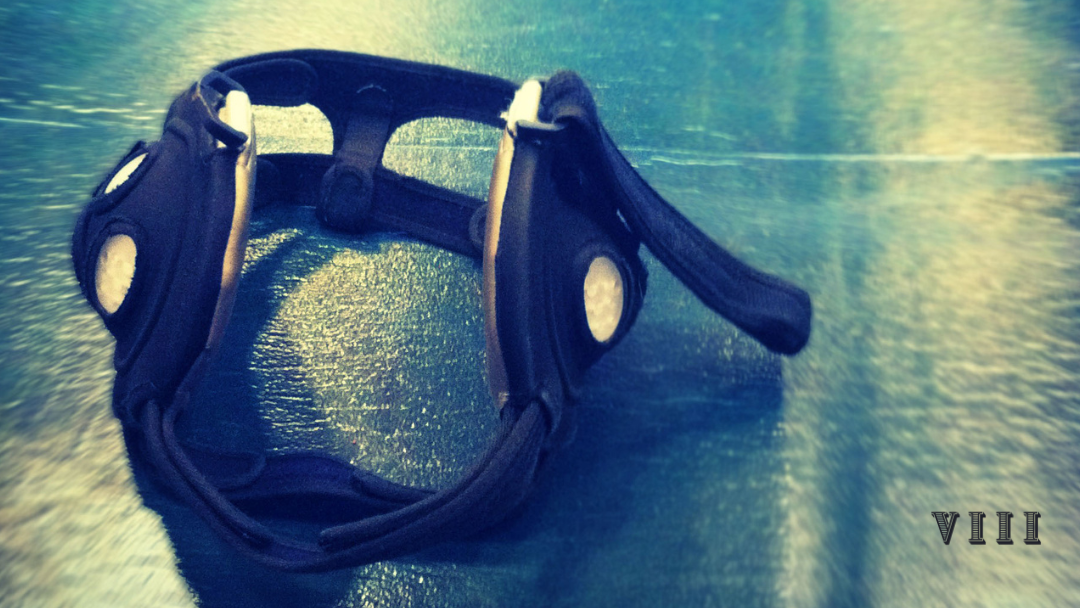
After three overtimes, the previous match finally ends. You fumble to press the pulsing, red circle on your cell phone as your son gives a double hand-slap to his coach. He checks in at the scorer’s table and sprints to the center of the mat. After wrapping the red anklet around his lower leg, he kneels momentarily to pray. He is physically, emotionally and spiritually prepared for war. His competitor is an unseeded and unranked wrestler from California. He won his first-round match by fall but is now nowhere to be seen. Suddenly, a balding, middle-aged man that you do not recognize walks up to the referee. Immediately thereafter your son has his hand raised in victory without a single second of competition taking place.
As your child returns to the stands, you find out that the absent opponent had indeed won his first-round match, but he also suffered an injury which left him unable to compete in round two. Now your son has progressed to the third round of the bracket. He is next slated to wrestle the number two seed, an athlete from Pennsylvania. Your kid has been sitting in a plastic chair all day, without having wrestled a single second, and now he will have the pleasure of facing a young man who is ranked ninth in the country. He will be squaring off against a twelve-year-old who finds it necessary to shave his beard and mustache every Monday, Wednesday, and Friday before driving himself to school.
The clock steadily ticks toward 9 PM, and your son is about to see his first real action. He repeats his warm-up routine and pep talk from his coach. You and your family move to seats located on the opposite side of the venue behind mat #5. Your son is up next. Suddenly, the pulsating hum of “Thunderstruck” is broken for the first time in fourteen hours. A halting voice—which may or may not have come from Lucifer himself—booms over the loudspeaker: “Once the matches that are currently on the mats conclude, the tournament is completed for the night.” Your heart sinks. You will now retire to a cramped, extremely overpriced room at the Quality Inn, all the while knowing that in the first moments of day two, your son will get the crap kicked out of him by an opponent that he has zero chance of defeating. You toss and turn for hours as the sound of grandpa’s snoring echoes through the tiny hotel room.
For many wrestling parents the first time that they ever see their child exposed as a failure is on the wrestling mat. When parenting a kid who competes in a team sport, after experiencing defeat, the blame often falls on many people who are not the actual child.
“My daughter made the last out of a one-run softball game trying to steal third base, but it wasn’t her fault because the coach gave her the steal sign,” softball mom will complain.
“My son blocked on the line beautifully, but the running back hit the wrong gap, which led to the fumble that lost us the game,” football dad will muse.
When a child loses a wrestling match, there is no one else to blame. At the conclusion of the match, your precious angel is summarily escorted to the center of the mat to be publicly humiliated. Shame is bestowed on them as their opponent’s hand is raised in triumph, while their hand is held low in defeat. Then, just in case spectators might have been seated on the other side of the gym and didn’t get a good look at your child’s anguish, the referee turns the competitors around to face the crowd on the opposite side of the venue and the process is repeated.
Once the contest is over, things don’t get a whole lot better. In the final minutes of a football or baseball game, players have a few moments to sit on the bench or in the dugout and reflect on their performance. After the final buzzer of a basketball game, the athletes head into the locker room to cool down and catch their breath. Immediately after a wrestling match ends, while the competitor still has adrenaline and aggression coursing through their veins, they are immediately face to face with their coach and parents. The coach invariably wants to explain to them the fine details of what they did right or wrong, while the parents press ever closer to celebrate their victory or to console them in defeat. This confluence rarely leads to improved future performance or golden family moments.
The journey that I have just led you on represents only a few small droplets in one parent’s bucket of emotional pain. It is just the tip of an iceberg of heartache. Today, I publicly call out all of the coddled cricket parents. All of you spoiled swimming dads, step into the octagon. I dare any tantruming tennis mom or frenzied football father to try and rival my rant! (Cheer moms, respect; I ain’t got no beef with you).
JOHN FRANKS is a writer, teacher, coach and father from Allen, Texas. He is a graduate of Western Oregon University with a Bachelor’s degree in Secondary Education. John credits important influences from his family and his days growing up in the small town of Glide, Oregon. He enjoys bowling, fishing and writing about his lifetime of experiences.
Like what you’re reading?Get new stories, sports musings, or book reviews sent to your inbox. Drop your email below to start >>>
NEW book release AWRY by duncan b. barlow. Order the book of stories of which Brian Evenson calls “meticulous and precise, painful and surprising.”
GET THE BOOK