All morning, the passersby sneezed, and the old man looked on in silence.
Joggers snatched up their t-shirt tails, wiped noses and eyes. Cyclists, wracked by sudden coughing spells, veered into bushes; twice, the riders nearly collided with strollers. Ordinary pedestrians sniffled ceaselessly and scratched their forearms to stripes, their chests blooming a rosy patchwork of hives.
From his usual bench in the park across from his ground floor unit, the old man gazed about and wondered at the strange state of the park-goers—skateboarders gliding past, snot-faced and teary-eyed, mothers puffing on inhalers, then bending over to press one to the lips of each toddler, dog-owners hacking into elbows while walking their pet, only to have the poor creature seize up in its own sneezing fit, moments later.
Not only had the old man’s neighborhood been struck, but as far as anyone knew, from coast to coast, towns were shutting down festivals and fairs, weddings first moved indoors, then got canceled, sport stadiums emptied out.
The local farmers’ market which took place lakeside in the park every Sunday, instead changed the marquee to read: NO OUTDOOR MARKET UNTIL FURTHER NOTICE, and the popular French food truck that had pulled up to sell pastries and crepes sat alone, deserted of customers.
Those who remained out and about appeared stunned.
The old man had awakened to his neighbor’s coughing fit. He’d taken his morning coffee out back to his little square of a patio, but instead of the usual quiet, from behind the high fence blasted the nagging, asthmatic coughing fit.
So, the old man had hurriedly drank his coffee and walked to the park, found his favorite bench and watched, and the passersby sneezed and itched, wheezed and gagged. They fumbled for tissues in purses, interrupted strangers to beg for a Zyrtec or Benadryl. Someone produced a Flonase, at once eagerly passed around among the afflicted, their eyes so bloodshot and glazed the lids had nearly sealed shut. The sufferers gasped for air. The old man held out a tiny bottle of Olbas oil he carried with him in his pocket, and several children approached, sniffed, and hung about breathing deeply, smiling.
The old man missed his peaceful routine and solitude, but also marveled at the bizarre phenomenon. He liked to see his neighbors talking to one another, something they rarely ever did.
Not so for many others: the farm owners who couldn’t get migrants to pick the harvest, leaving the produce to rot in the fields, the fathers in yards, their backyard grills and lawnmowers covered and the kids inside, playing video games, eating too much junk food, and getting fat, the National Park rangers who somewhat welcomed the break in visitors but also began to worry about lost revenue and lack of maintenance as workers called out.
The old man saw the suffering of his neighbors, and so he beckoned to those who were fleeing the park to lock themselves in their cars and indoors. “Stop running,” he called, and the people glared from behind their puffy eyes. They waved him off. They jumped behind the doors of their SUVs and condo units, and the locks clicked.
The neighbors had doubts about the old man, and no wonder. For how many decades had they lived beside one another, and yet no one knew a soul? Who knew what was blowing around in the air to make so many sneeze and cough, but the outdoors was unpredictable, so how could anyone wonder? The residents embraced the new mantra to “stay indoors” until the air cleared. They liked to look down and see the park’s botanical garden and lakeside paths human-free. The old man wandered alone, as the neighbors peered from behind shuttered blinds, and they didn’t care, as long as they might stay inside.
Hidden across the earth, the people baked bread and held yoga poses and played music. Now and then, if a child suffered a blow by the fist of a drunken father, or an elderly woman had a stroke and fell, no one stopping by to find her for days, if here and there, officials locked residents inside their apartment buildings and a fire broke out, killing those inside, was that worse than whatever was blowing on the air, that caused so many itchy eyes blurred by tears, and post-nasal drip?
Had they been together in a cathedral or stadium, those indoor dwellers would have cheered and danced until they dropped.
Those shut-ins decorated their windows and posted colorful signs on their doors and sidewalks. But the rest of the people—the ones who hadn’t hidden away indoors, the old man in the park among them—didn’t understand what many of the pictures and sayings meant. A bunch of flowers with a black ‘X’ over them. KEEP OFF THE GRASS. TREES KILL.
Every day, the old man strolled to his park bench, waved, and called, “Come out” to those who peeked behind curtains. But every day, those who hurried from their cars to their doors with groceries only turned their backs and ignored him.
The old man got mad. He pictured the children inside, faces growing sickly and pale from lack of sunlight. He imagined breaking in the doors and snatching the children away, outside, and the sound of their laughter as the breeze struck their faces.
But he didn’t want to kidnap anyone.
“Come outside!” he yelled at the buildings.
But the shut-ins refused to budge. At last, they’d freed themselves of the outdoors, its volatility and discomfort. Since the beginning, they’d had to endure the temperature swinging from hot to frigid and back again, lightening strikes, a snake suddenly darting onto one’s path. Over time, few had to sleep on the ground and trails became paved and smooth, everywhere a posted map. The natural world, now tamed and more pleasant, could offer rest and respite on occasion. Until the air itself made taking a single breath difficult. Now, those indoors preferred to stay indoors, air purifiers humming, forever—no matter if the skies had cleared.
The old man paced and called, “Come down, now!”
“What’s he shouting?” his neighbors asked one another behind the glass. Then they veered back to jumping before their exercise videos. They rushed to remove that day’s freshly baked bread.
Conditions grew more dire. Those indoors used so much more electricity, the grids faltered. Rolling blackouts commenced. Power companies had difficulty finding enough road crews who would spend hours in the open air.
The shut-ins had gone beyond becoming a hindrance. In one neighborhood, a mob that had refused to emerge from their homes for weeks surrounded an Instacart driver and looted all the deliveries in his truck. Reports came that many of those indoors, especially children, had now broken out in great mysterious welts after eating foods that had never posed a deadly reaction before. Call center operators frantically ordered ambulances for children whose throats were now closing after eating a chicken nugget or French fries.
Everywhere, sidewalk cafes and outlet malls shuttered, the grocery stores had almost no produce to sell, the sporting goods stores were going out of business, the Home Depot Garden Center closed, its gates padlocked. In yards, around office buildings and schools, the grass and weeds stood knee-high, the lawnmowers silent but the men drank more, and the women and children ran and hid from their beatings.
Tents of the newly homeless crowded the park. Soon trash piled up in the bins, and overnight, thieves stole copper from wherever they could find it. Vape shops, massage and tattoo parlors boomed while construction workers, migrant pickers, and other outdoor laborers pulled up in parking lots every evening to sleep in their cars and look for other work in the cities the next day. But the cities were quickly falling apart.
The old man grew frantic, and no longer sat on his bench every morning but paced.
“Leave your homes,” he called to his neighbors. “You’re only making things worse.” He wanted to say more but he doubted many were listening. If you stay inside, you’ll not only die in there, but you’ll kill the rest of us, too. We need one another. We need everyone.
He waved at them, stamped his feet. Made signs and held them above his head. “Today is a Beautiful Day to Live Free.”
But his neighbors had kept inside for so long, they had stopped listening to cries or sounds from outdoors. Hardly any faces blinked from between the shades. The colorful, handmade posters drooped and peeled away from the glass. Sidewalk signs had long since disappeared in waist-high grass.
“Listen, please!” the old man cried. “The water treatment plants will soon get shut off and the lights will go out!”
Those inside remained, doors shut.
The old man left his picketing area in front of the bench, searched his cabinets beneath the sink, and assembled the ingredients. Potassium nitrate and sugar. He couldn’t believe what he was about to do.
He hoped the residents wouldn’t panic, but he couldn’t sit back and do nothing, either, and theoretically, when he set off a nontoxic smoke bomb, no one should get hurt, but hopefully run out.
He envisioned the people stumbling out of the fog, rubbing their eyes and squinting in the sunlight. The children grabbing the fistfuls of grass and squealing in delight. Faces lifted toward the afternoon rain. Dogs and cats bounding down the sidewalks, gleefully scratching tree trunks.
Perhaps only a few minutes in the fresh air and sunshine would be all his neighbors needed, and even if they didn’t return to jogging or cycling or skateboarding just yet, they’d return to work and school, to shopping and dining out in restaurants. Even if they only went out one day a week to start. Maybe a glib, catchy phrase would do the trick: “Walkabout Wednesdays,” for instance.
At first, his neighbors would still be confined to their street, the park. But one day, someone would decide to stroll or bike a bit farther. And if that person found more courage and confidence, he or she might decide to leave the neighborhood altogether, from the paved trail to what lay beyond—uncertain, unruly—woods and mountains, knowing one could always return.
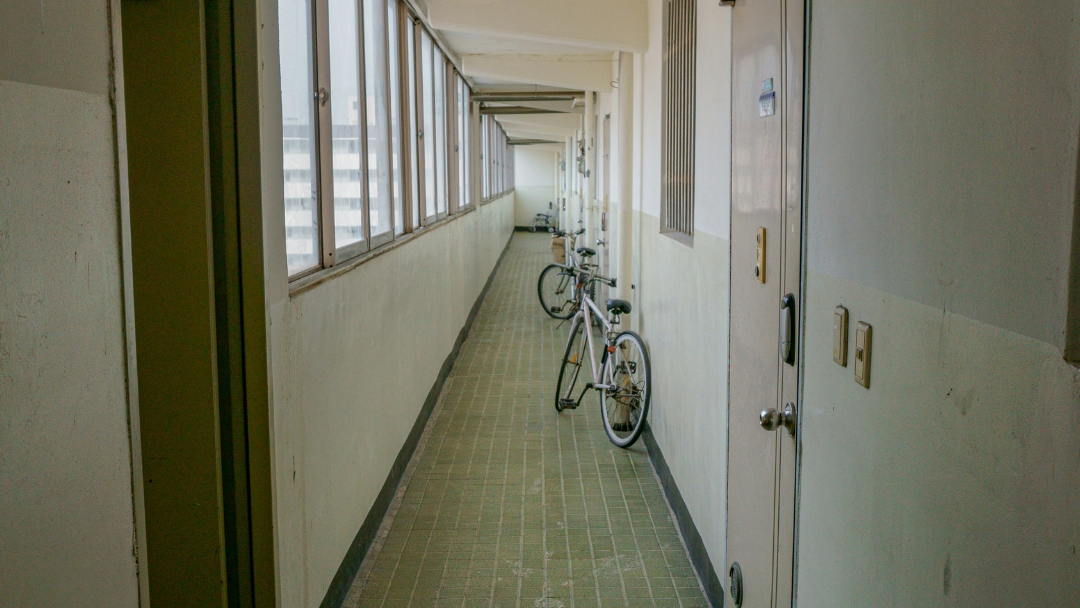
The old man crept inside the foyer of his condo building, and when he was certain he was alone, the elevator lights darkened, he set off the smoke bomb. Within moments, the fire alarm let loose its piercing shrill; he plugged his ears and backed away. The first door to one of the ground floor units opened in the hallway, and out staggered a teenage boy, one of the skateboarders, but his shaggy hair had grown way past his shoulders and swung along his elbows; in the fog he groped along the wall. The old man grabbed him by the arm, steered him to the door, and shoved him out.
The old man guided the teenager down the sidewalk, toward the park, the kid stumbling and dragging his feet, the sunlight bright, but the old man kept pressing him on with little shoves. They passed his bench, and the skateboard park now ringed by tents of homeless, just outside the entrance to the botanical gardens.
“See,” the old man yelled. “I freed one!”
But the campers and refugees just stared.
“Don’t all jump at once,” the old man said. “This is just about a miracle—here come the rest, now,” he said, and whirled around. He clapped the boy on the back, and that’s when the old man saw that the kid stood, head hung, mute.
Slowly the homeless campers climbed to their feet. Across the street, smoke seeped out of the condo building’s entrance, and a line of residents haltingly emerged, each groping the air before them, old and young.
“Let’s go!” the old man cried and gestured to those on the street—the linemen fixing the electrical wires, the food truck still selling crepes from its window, the Instacart driver exiting his vehicle, order in one hand, mace in the other. All watched the residents stumble out of the building.
Before the street keepers, the longtime shut-ins shuffled along, mute. In the bright noonday sun, they did not so much as squint. Many of the homeless pointed and laughed. A few even approached and waved in front of the blank staring faces. They waved hands in front of little children’s faces but these too, remained vacant and lost. A couple of children spun around, lurching, wanting to go back inside. But all in all, the old man relaxed. It had been easier than he’d thought to get the shut-ins outside. Now to find them a doctor who could provide treatment.
But things quickly changed.
One of the construction workers approached a stunned mother and her two children, and she began to punch him, wailing, her fists flying.
Another resident started to run back toward the building, fell, and when he climbed back to his feet, spun around, and headed full speed in the opposite direction, into the street and an oncoming truck.
Those on the street rushed the group, knocked the frightened and bewildered neighbors to the pavement, and charged into the condo unit. Not long after they emerged carrying TVs, computers, and other loot.
The old man looked down at his shoes. He grabbed the arm of the listless skateboarder teen who had just been standing there, swaying.
“I didn’t know,” the old man said. “I’m sorry. Please forgive me.”
The teen stared off and said nothing. Once he’d had a future, but maybe that future had been cut off long before so many had fallen so severely and mysteriously allergic and chose to shut themselves inside. Perhaps he might become more alive should he never ride his skateboard again but find himself left to wander in his newborn muteness. Perhaps he didn’t care.
An ambulance careened around the corner, sirens wailing for the victim who lay still, crosswalk splattered with blood. The old man turned away his gaze.
And then in silence, the skateboarder darted for the street. His lanky frame bounced off the ambulance face, rolled, struck hard the pavement. Brakes squealed. The old man cried out; passersby screamed. Two fire trucks came barreling around the corner.
One by one—then in a rush of bodies—his neighbors zig-zagged full speed into traffic.
VANESSA BLAKESLEE’S latest book, Perfect Conditions: stories is the winner of the Foreword INDIES Book of the Year. She is the author of the novel, Juventud, and Train Shots: stories, both of which received awards and accolades. Her writing has appeared in The Paris Review Daily, Kenyon Review Online, The Southern Review, and many other places. Follow her online at Instagram, Facebook, and Medium.
Like what you’re reading?Get new stories, sports musings, or book reviews sent to your inbox. Drop your email below to start >>>
NEW book release AWRY by duncan b. barlow. Order the book of stories of which Brian Evenson calls “meticulous and precise, painful and surprising.”
GET THE BOOK